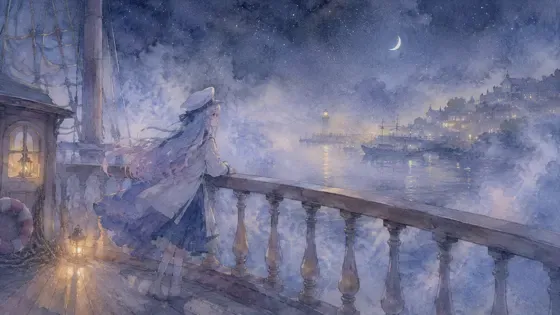
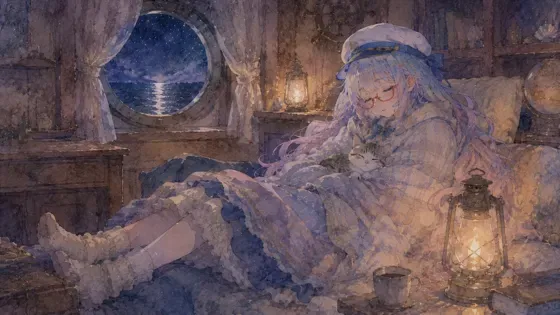
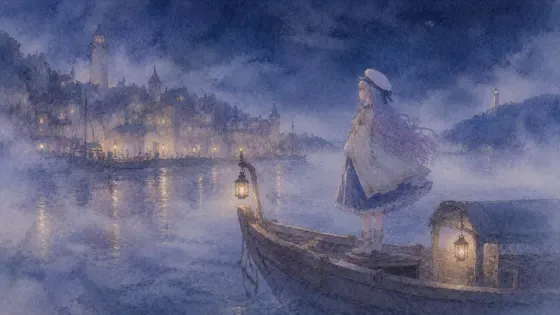
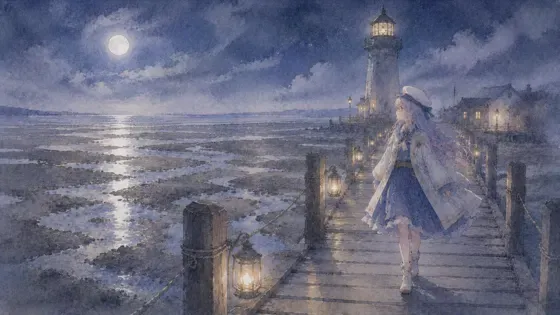
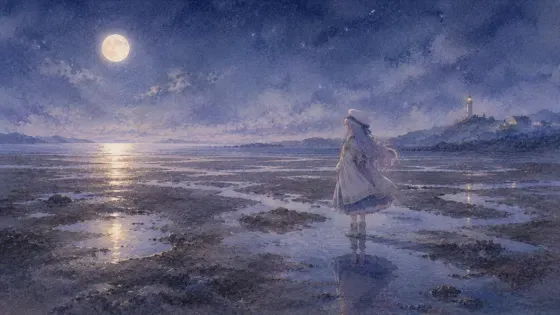
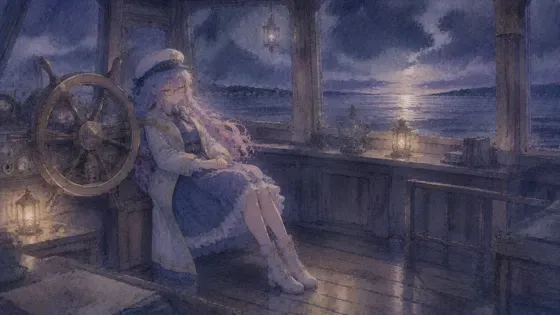
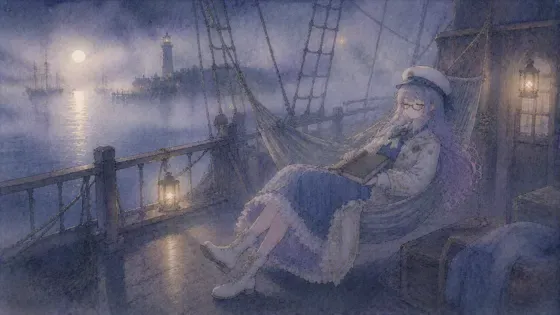
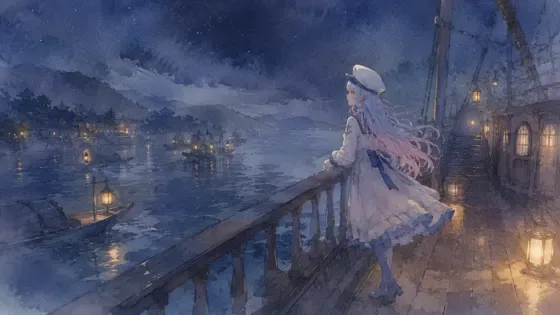
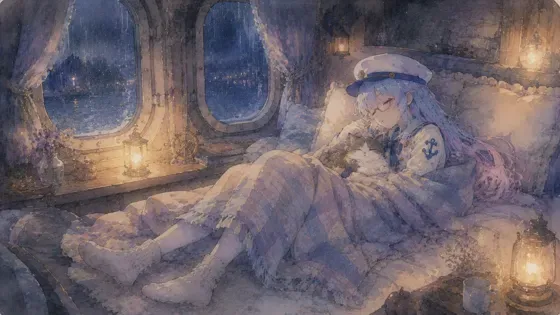
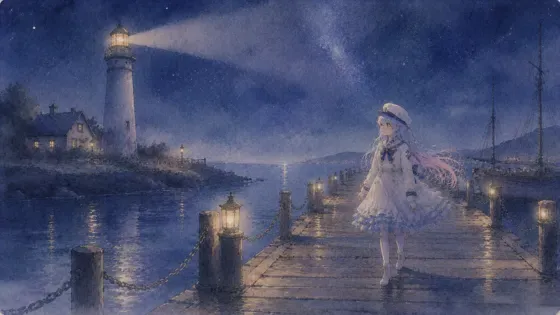
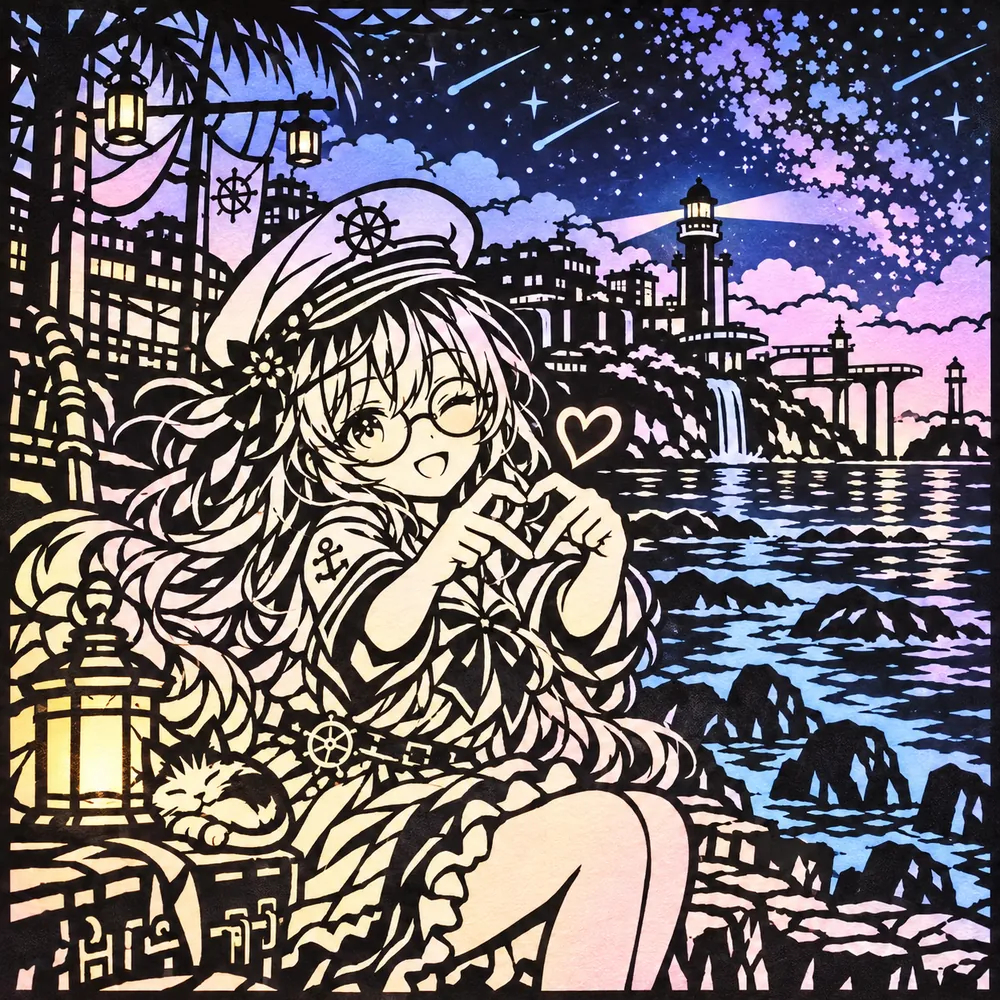
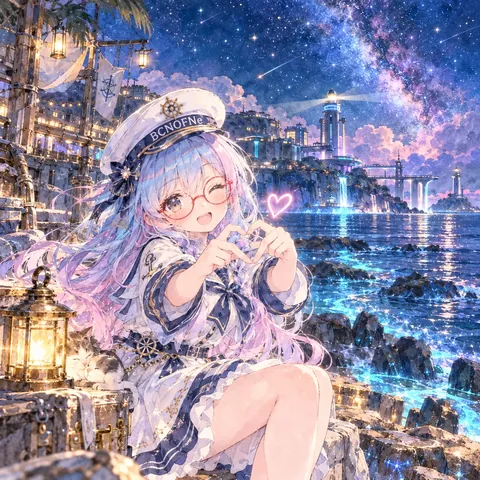
プロンプト
英語(English)
Redraw the attached picture in the style below, "Shadow Cut" (single-sheet silhouette paper cut). This is a change of technique only: the picture stays the same picture, and only the way it is drawn and painted changes. Every section describes that one finished image.

[How to use the attached image]
Treat the attached image as the fixed layout. Copy its framing, camera height, horizon line, and the position and size of every person and object as they are. Then throw away its original paint, line work and surface texture, and rebuild everything — people, background, sky, small props — with the materials and marks described below. Apply the style to the whole frame evenly, not only to the background or only to the character.

[What must stay the same]
Same number of people and objects, each in the same place. For each person: the same face shape and features, expression, eye direction, hairstyle and hair color, clothing design and colors, accessories (glasses keep their shape and color), pose, hand positions, body proportions and head-to-body ratio. Same overall color relationships and the same time of day. Do not add, remove or move anything, and do not invent new characters, animals, props or background buildings.

[If nothing is attached]
If no image is attached, first set up a simple scene that suits the request (one subject, a clear place, a readable silhouette), then draw that scene entirely in this style, following every section below in the same way.

[Aspect ratio]
Use the attached image's aspect ratio and canvas. Without an attachment, use the ratio named in the request, or 3:2 landscape if none is given. Do not crop or extend the frame.

[Lines and edges]
There are no outlines; the whole picture is the contrast between black paper and the light ground. Every form is a cut shape, and the thin connecting bridges of paper between shapes act as the lines: hair strands, window bars, rigging, grass and lace-like patterns are all slim bridges that keep the single sheet in one connected piece.

[Shapes and how the surface is built]
One sheet of solid black paper, cut with a fine craft knife and mounted on a bright, flat or softly graded ground. All information lives in the cut: shapes are either black paper or open light. Nothing floats free; every island of black is tied to the rest by a narrow bridge, and tiny holes are cut for eyes, buttons, windows and sparkles.

[Texture and material]
Matte black paper with a very fine grain, sharp knife edges with small natural wobbles in the curves, and a thin dark shadow line where the sheet lifts a hair above the ground. The light ground may show a faint paper tooth. No gray tones inside the black.

[Color]
The black sheet is the only form color. Keep the attached image's arrangement by turning every dark, mid and bright region into cut or open shapes, and carry its hues only in the one light ground behind the sheet: a gradient of the image's dominant colors, such as the sky or the main lamp glow. Small colored spots seen through cuts may echo accent colors sparingly.

[Light and shading]
The ground glows evenly, as if the cut sheet were held in front of a window or a paper lantern. Open areas are the brightest; the black never shows modeling. Distance is shown by size, overlap and fewer details, not by shading.

[Faces, hands and small details]
Show the face in profile or a clear three-quarter outline so that the nose, lips and chin read as a clean black edge, matching the attached person's head angle and expression through the contour and one small cut for the eye or smile. Hair becomes a cut mass with fine strand slits. Glasses become a thin open frame cut through the face, keeping the frame shape. Hands stay in pose as simple solid silhouettes with clear fingers separated by narrow gaps.

[Finish]
A clean, framed single-sheet cut, photographed straight on, with the thin shadow gap between sheet and ground and crisp, high contrast. The result must look like a finished piece made in this one technique from edge to edge, not a filter laid over the original.

[Do not mix in]
No gray shading, gradients or outlines on the black. Do not use several layered colored sheets, stained-glass panes or woodcut gouge marks. No islands of black that float without a bridge. Do not mix in watercolor washes, blooms or paper-white bleeding, and do not blend in any other art style than the one described here. No readable text, letters, numbers, logos, watermarks or signatures unless they were already in the attached image.

[If instructions conflict]
First keep the layout and the people of the attached image, then apply this style's materials and marks fully, then match the color relationships, and only then work on fine detail. If keeping a detail exactly would break the style, simplify the detail in the style's own way rather than dropping the style.
日本語
添付画像を、下の画風「影切り絵」(切り絵(黒の一枚切り))で描き直してください。変えるのは描き方だけで、絵そのものは同じ絵のままにします。どの段も、その 1 枚の完成した絵の話です。

【添付画像の使い方】
添付画像を動かせない下図として扱う。画角・カメラの高さ・地平線の位置、人物と物の位置と大きさをそのまま写す。そのうえで、元の塗り・線・表面の質感は全部捨て、人物・背景・空・小物のすべてを、下に書いた材料と手の跡で作り直す。画風は画面全体に同じ強さでかける。背景だけ、人物だけにかけない。

【変えない所】
人物と物の数、それぞれの位置は同じ。人物は、顔の形と目鼻立ち・表情・視線・髪型と髪の色・服のデザインと色・小物(メガネは形も色も保つ)・ポーズ・手の位置・体の比率と頭身を変えない。色どうしの関係と時間帯も同じ。何も足さず、消さず、動かさない。新しい人物・動物・小物・背景の建物を作らない。

【添付が無い時】
添付が無い時は、依頼に合う簡単な場面(主役 1 つ・場所がはっきり・形が読みやすい)を先に決め、その場面を最初から最後までこの画風で描く。下の段は同じように全部守る。

【比率】
添付画像の比率とキャンバスに合わせる。添付が無い時は依頼の比率、指定が無ければ横長 3:2。画面を切ったり広げたりしない。

【線と縁】
輪郭線は無く、絵のすべてが黒い紙と明るい地のコントラストでできる。形はすべて切り抜いた形で、形と形をつなぐ細い紙の橋が線の役をする。髪の毛、窓の桟、索具、草、レースのような模様はどれも細い橋で、1 枚の紙がひとつながりに保たれる。

【形と面の作り方】
真っ黒な紙 1 枚を細い刃で切り抜き、明るい平らな地か、やわらかく移り変わる地に載せる。情報は切り口にだけあり、形は黒い紙か、抜けた光のどちらか。宙に浮く黒は作らず、どの黒の島も細い橋で全体につなぐ。目・ボタン・窓・きらめきは小さな穴で切る。

【質感・素材】
ごく細かい目のあるつや消しの黒い紙。刃の縁はシャープで、曲線に自然な小さなゆらぎがある。紙が地から髪の毛ほど浮いとる所に、細い暗い影の線。明るい地にはかすかな紙の目。黒の中に灰色の濃淡は無し。

【色】
形に使う色は黒い紙だけ。添付画像の配置は、暗い所・中間・明るい所のすべてを、切った形か抜けた形に置き換えて保つ。画像の色合いは紙の後ろの 1 枚の明るい地にだけ持たせる:空や主な灯りのような、画像のおもな色のグラデーション。切り口から見える小さな色の点で、差し色を少しだけ響かせてもよい。

【光と陰影】
切った紙を窓か提灯の前にかざしたように、地がむらなく光る。抜けた所がいちばん明るく、黒には立体の陰影を付けない。遠さは、大きさ・重なり・細部の少なさで見せ、陰影は使わない。

【顔・手・細かい所】
顔は横顔か、はっきりした斜め向きの輪郭にして、鼻・唇・あごがきれいな黒い縁で読めるようにし、添付の人物の顔の向きと表情は輪郭と、目や笑みの小さな切り抜き 1 つで合わせる。髪は細い毛筋の切れ込みを入れたひとかたまり。メガネは顔を貫く細い抜けの枠にして、枠の形を保つ。手はポーズを保った単純な影の形で、指は細いすき間で分ける。

【仕上がり】
額に入れた、きれいな 1 枚切りを正面から撮った仕上がり。紙と地のあいだに細い影のすき間があり、コントラストは高くくっきり。端から端まで、この 1 つの技法で作った完成品に見えること。元の絵にフィルターを重ねただけに見えないこと。

【混ぜない物】
黒の上に灰色の陰影・グラデーション・輪郭線を入れない。色紙の何枚重ね、ステンドグラスの区画、木版の彫り跡に寄せない。橋が無くて宙に浮いた黒の島を作らない。水彩のにじみ・たまり・紙の白のぼかしは入れない。ここに書いた画風以外の画風を混ぜない。添付画像に元からある物を除き、読める文字・数字・ロゴ・透かし・署名を入れない。

【指示がぶつかった時】
まず添付画像の配置と人物を守る。次にこの画風の材料と手の跡を全体にしっかりかける。次に色の関係を合わせ、細部は最後。細部を正確に残すと画風が崩れる時は、画風を捨てずに、その画風のやり方で細部を省略する。
ほかの呼び方:切り絵(黒の一枚切り)・切り絵・黒い切り絵・影絵・シルエット切り絵・一枚切り
プロンプトは、ご自分の画像生成にご自由にお使いください(商用も可)。使う時に「BCNOFNe」の名前を添えてもらえると嬉しいです(任意)。見本の画像の転載・再配布はご遠慮ください。使われ方を知るため、押されたボタンや開かれたページの回数(番号・言語・混ぜた画風の組み合わせ)を、Cloudflare のサービスを使った当サイトの集計用サーバーで数えています。入れた文字は送りません。Cookie や端末の識別子は使いません。サイト全体のアクセス数を見るため、Cloudflare Web Analytics(Cookie なし)も使っています。通信や記録の扱いは、Cloudflare, Inc. のプライバシーポリシーに従います。