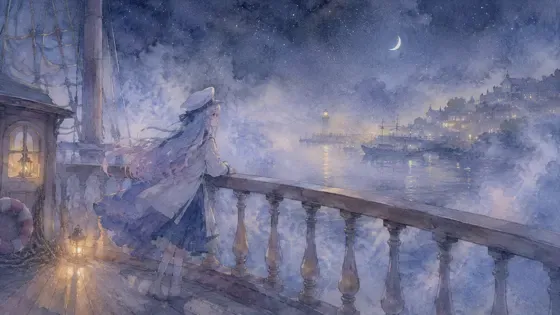
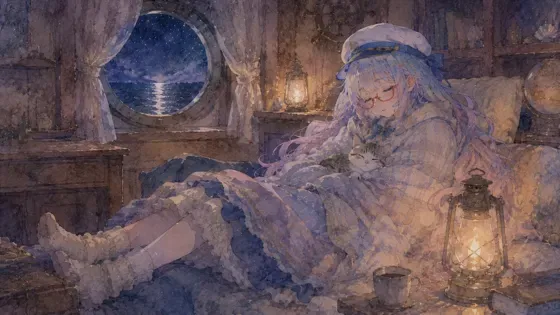
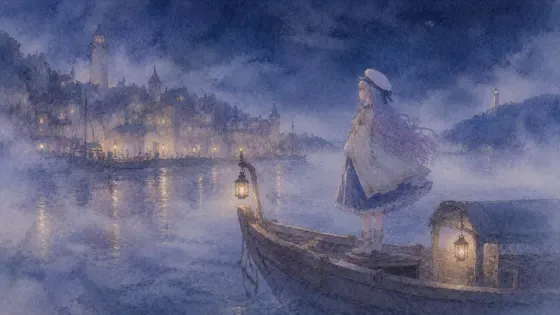
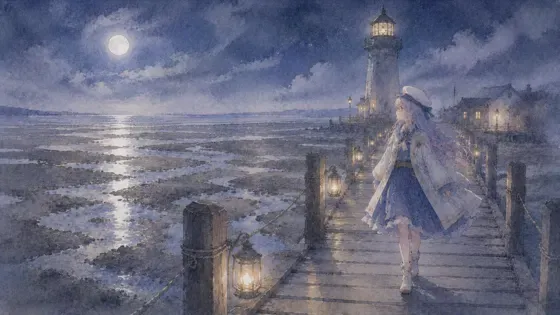
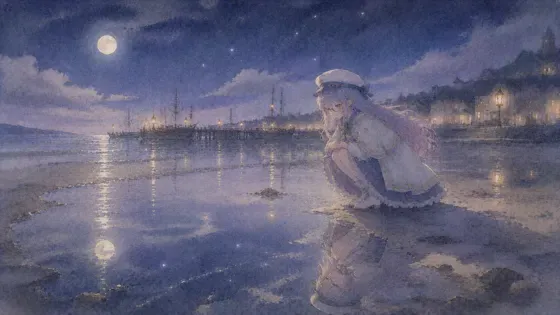
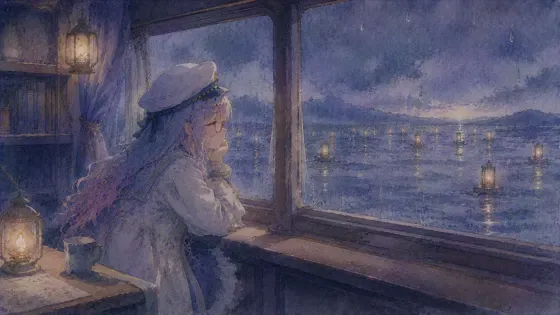
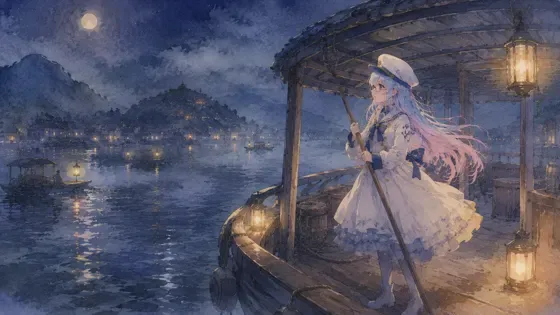
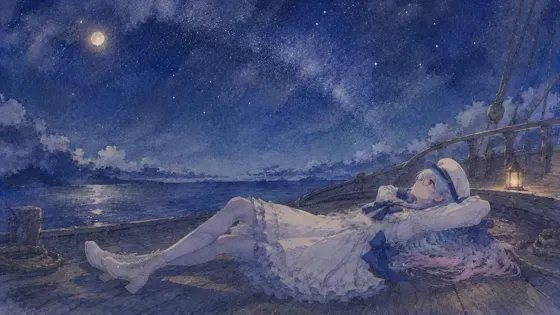
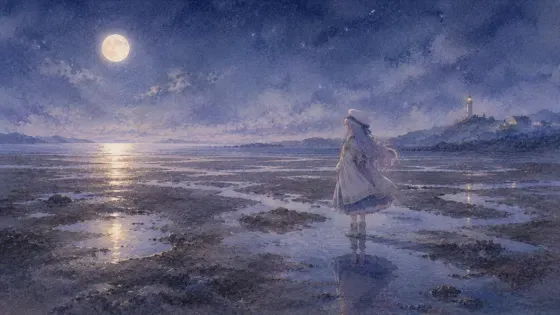
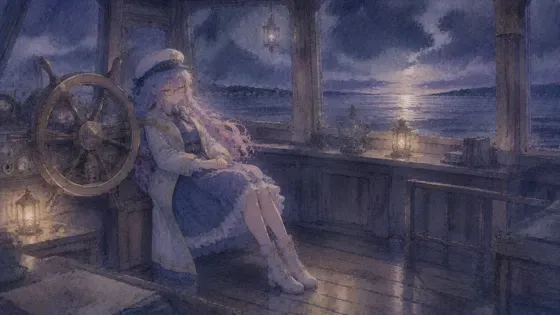
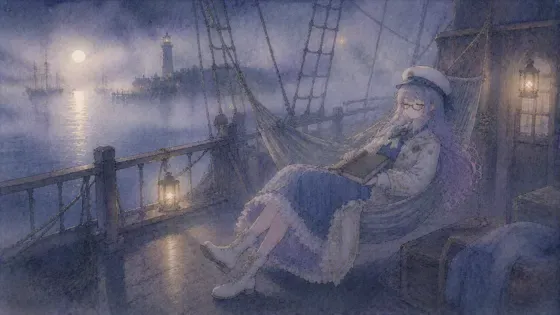
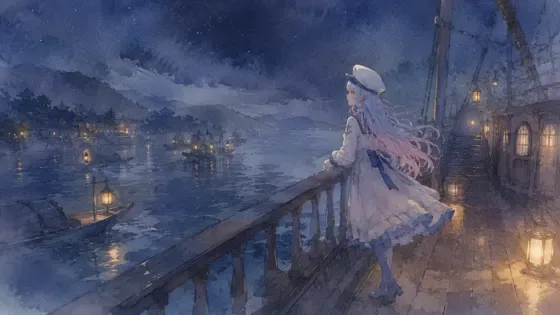
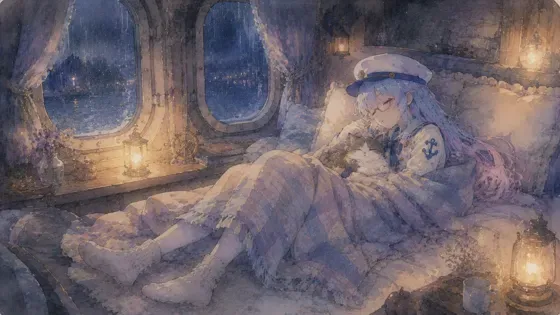
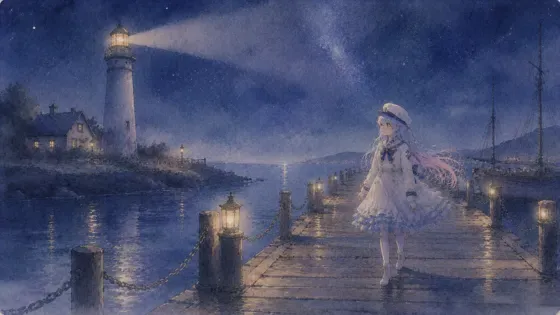
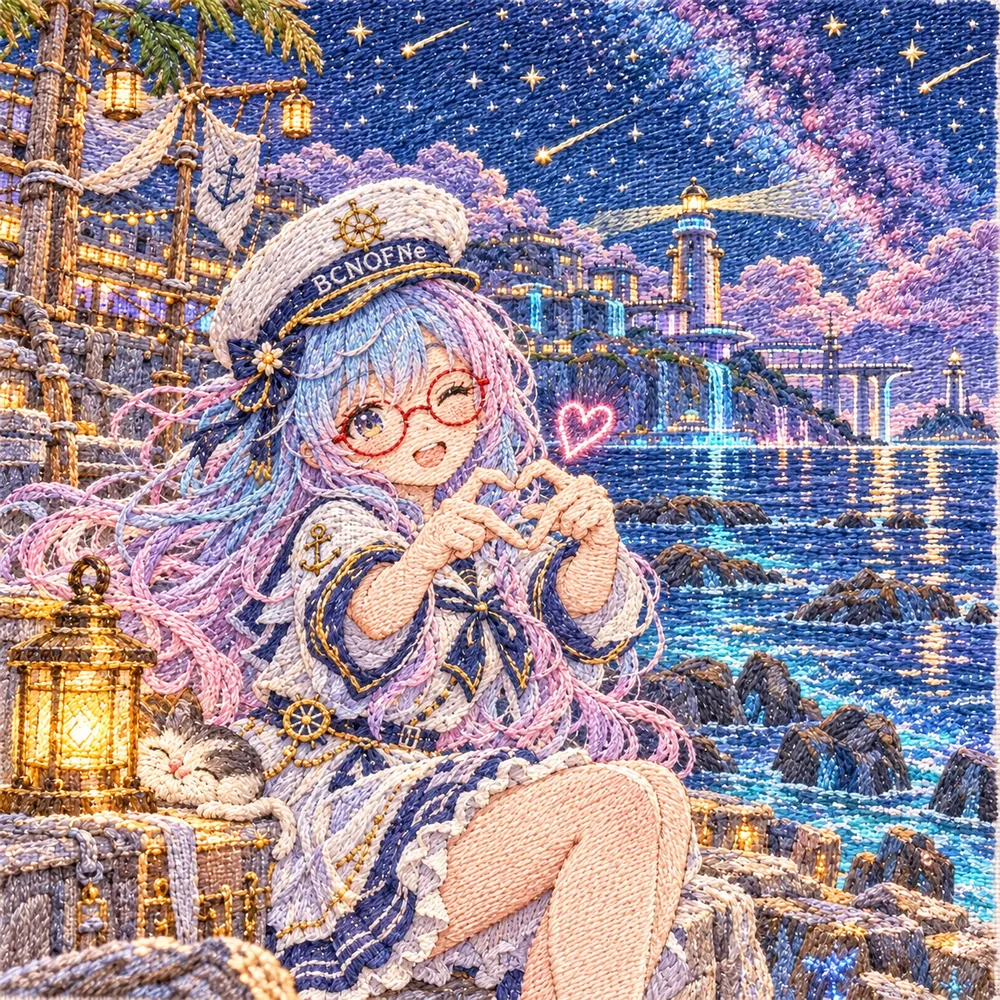
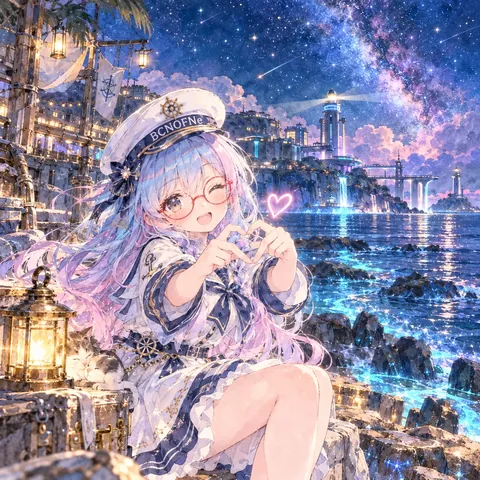
プロンプト
英語(English)
Redraw the attached picture in the style below, "Thread Painting" (hand embroidery). This is a change of technique only: the picture stays the same picture, and only the way it is drawn and painted changes. Every section describes that one finished image.

[How to use the attached image]
Treat the attached image as the fixed layout. Copy its framing, camera height, horizon line, and the position and size of every person and object as they are. Then throw away its original paint, line work and surface texture, and rebuild everything — people, background, sky, small props — with the materials and marks described below. Apply the style to the whole frame evenly, not only to the background or only to the character.

[What must stay the same]
Same number of people and objects, each in the same place. For each person: the same face shape and features, expression, eye direction, hairstyle and hair color, clothing design and colors, accessories (glasses keep their shape and color), pose, hand positions, body proportions and head-to-body ratio. Same overall color relationships and the same time of day. Do not add, remove or move anything, and do not invent new characters, animals, props or background buildings.

[If nothing is attached]
If no image is attached, first set up a simple scene that suits the request (one subject, a clear place, a readable silhouette), then draw that scene entirely in this style, following every section below in the same way.

[Aspect ratio]
Use the attached image's aspect ratio and canvas. Without an attachment, use the ratio named in the request, or 3:2 landscape if none is given. Do not crop or extend the frame.

[Lines and edges]
Lines are stitched, not drawn. Contours and details are made with a single strand of thread in satin stitch, stem stitch or backstitch, each stitch visible as a short straight segment with tiny gaps. Edges are slightly soft where thread meets cloth, and curves are made of many short stitches.

[Shapes and how the surface is built]
A woven cotton or linen cloth is the ground, and the picture is filled with thread. Large areas use long-and-short stitches or satin stitches laid in parallel rows that follow the form: around a cheek, along a wave, down a sleeve. Fine details use French knots and tiny stitches. A little bare cloth is left showing in places.

[Texture and material]
Twisted thread with visible ply and fuzz, tiny shifts of stitch direction that change how the sheen catches, slightly raised stitches casting thin shadows on the cloth, and the plain weave of the fabric visible in gaps. Matte cotton areas sit next to a few silky, brighter areas.

[Color]
Keep the attached image's hues and relationships, translating them into the nearest embroidery thread colors, with soft gradations made by blending neighboring thread shades row by row. The cloth ground is a plain off-white, cream or pale neutral that shows through lightly.

[Light and shading]
Light follows the attached image but shows up as thread sheen: stitches turned toward the light shine brighter and those turned away look darker, even in the same color. Shadows are darker thread shades, not painted gray.

[Faces, hands and small details]
Faces are stitched in fine, smooth satin stitches of a skin-tone thread, with single-strand backstitch for the eyes, brows, nose and mouth, and tiny knots for pupils, keeping the attached person's identity and expression. Hair is long stitches following its flow in the original color. Glasses are couched or backstitched thread in the original frame color. Hands are filled with short stitches and keep their pose.

[Finish]
A framed hand-embroidered piece seen straight on, with a small margin of cloth around the stitched area. Stitches are neat but visibly handmade, never machine-perfect. The result must look like a finished piece made in this one technique from edge to edge, not a filter laid over the original.

[Do not mix in]
Do not draw outlines in ink or paint on the cloth. No printed fabric, cross-stitch grids, patch appliqué or knitted look. Not a woven tapestry, not a crochet, and no smooth digital gradients. Do not mix in watercolor washes, blooms or paper-white bleeding, and do not blend in any other art style than the one described here. No readable text, letters, numbers, logos, watermarks or signatures unless they were already in the attached image.

[If instructions conflict]
First keep the layout and the people of the attached image, then apply this style's materials and marks fully, then match the color relationships, and only then work on fine detail. If keeping a detail exactly would break the style, simplify the detail in the style's own way rather than dropping the style.
日本語
添付画像を、下の画風「糸の刺繍画」(刺繍)で描き直してください。変えるのは描き方だけで、絵そのものは同じ絵のままにします。どの段も、その 1 枚の完成した絵の話です。

【添付画像の使い方】
添付画像を動かせない下図として扱う。画角・カメラの高さ・地平線の位置、人物と物の位置と大きさをそのまま写す。そのうえで、元の塗り・線・表面の質感は全部捨て、人物・背景・空・小物のすべてを、下に書いた材料と手の跡で作り直す。画風は画面全体に同じ強さでかける。背景だけ、人物だけにかけない。

【変えない所】
人物と物の数、それぞれの位置は同じ。人物は、顔の形と目鼻立ち・表情・視線・髪型と髪の色・服のデザインと色・小物(メガネは形も色も保つ)・ポーズ・手の位置・体の比率と頭身を変えない。色どうしの関係と時間帯も同じ。何も足さず、消さず、動かさない。新しい人物・動物・小物・背景の建物を作らない。

【添付が無い時】
添付が無い時は、依頼に合う簡単な場面(主役 1 つ・場所がはっきり・形が読みやすい)を先に決め、その場面を最初から最後までこの画風で描く。下の段は同じように全部守る。

【比率】
添付画像の比率とキャンバスに合わせる。添付が無い時は依頼の比率、指定が無ければ横長 3:2。画面を切ったり広げたりしない。

【線と縁】
線は描くのでなく、縫う。輪郭や細部は、糸 1 本どりのサテンステッチ・ステムステッチ・バックステッチで作り、ひと針ひと針が小さなすき間のある短い線として見える。糸と布の境の縁は少しやわらかく、曲線は短い針目をたくさん並べて作る。

【形と面の作り方】
地は織りの綿か麻の布で、絵は糸で埋める。広い面は、長短の針目かサテンの針目を平行に並べ、形に沿わせる:頬のまわり、波に沿って、袖に沿って。細かい所はフレンチノットと小さな針目で。布の地が所々少しだけ見えている。

【質感・素材】
撚りと毛羽の見える糸。針目の向きが少し変わるだけで光り方が変わる。少し盛り上がった針目が布にうすい影を落とし、すき間から平織りの布目が見える。つや消しの綿の面の隣に、絹のように明るい面が少しある。

【色】
添付画像の色合いと関係を保ち、いちばん近い刺繍糸の色に置き換える。やわらかい移り変わりは、近い色の糸を列ごとに少しずつ変えて作る。地の布は無地の生成り・クリーム・淡い中間色で、うっすら透ける。

【光と陰影】
光は添付画像どおりだが、糸のつやとして出る:光の方へ向いた針目は明るく光り、反対向きの針目は同じ色でも暗い。影は灰色を塗らず、暗い色の糸で表す。

【顔・手・細かい所】
顔は肌色の糸のなめらかで細かいサテンステッチで縫い、目・眉・鼻・口は 1 本どりのバックステッチ、瞳は小さな結び目で。添付の人の顔立ちと表情は保つ。髪は元の色の長い針目を流れに沿わせる。メガネは元の枠の色の糸を留め付けるか返し縫いする。手は短い針目で埋めてポーズを保つ。

【仕上がり】
正面から見た、額装の手刺繍。縫った所の周りに布の余白が少しある。針目はきちんとしているが、手仕事と分かる程度で、機械のような完璧さは無い。端から端まで、この 1 つの技法で作った完成品に見えること。元の絵にフィルターを重ねただけに見えないこと。

【混ぜない物】
布の上にインクや絵の具で輪郭線を描かない。プリント生地、クロスステッチの升目、アップリケ、編み物のような見た目にしない。織りのタペストリー、かぎ針編み、なめらかなデジタルのグラデーションと混ぜない。水彩のにじみ・たまり・紙の白のぼかしは入れない。ここに書いた画風以外の画風を混ぜない。添付画像に元からある物を除き、読める文字・数字・ロゴ・透かし・署名を入れない。

【指示がぶつかった時】
まず添付画像の配置と人物を守る。次にこの画風の材料と手の跡を全体にしっかりかける。次に色の関係を合わせ、細部は最後。細部を正確に残すと画風が崩れる時は、画風を捨てずに、その画風のやり方で細部を省略する。
ほかの呼び方:刺繍・刺繍画・ししゅう・糸絵・ステッチ
プロンプトは、ご自分の画像生成にご自由にお使いください(商用も可)。使う時に「BCNOFNe」の名前を添えてもらえると嬉しいです(任意)。見本の画像の転載・再配布はご遠慮ください。使われ方を知るため、押されたボタンや開かれたページの回数(番号・言語・混ぜた画風の組み合わせ)を、Cloudflare のサービスを使った当サイトの集計用サーバーで数えています。入れた文字は送りません。Cookie や端末の識別子は使いません。サイト全体のアクセス数を見るため、Cloudflare Web Analytics(Cookie なし)も使っています。通信や記録の扱いは、Cloudflare, Inc. のプライバシーポリシーに従います。