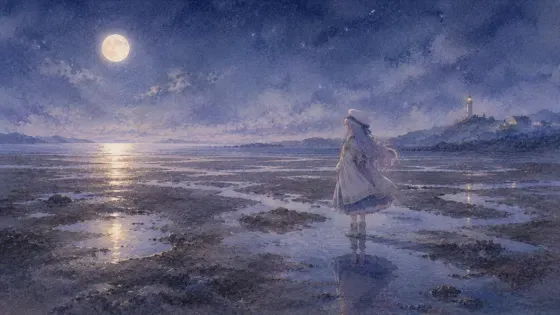
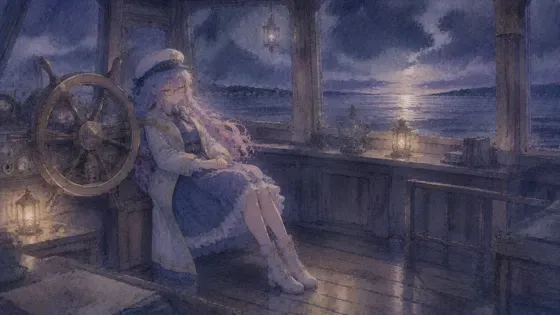
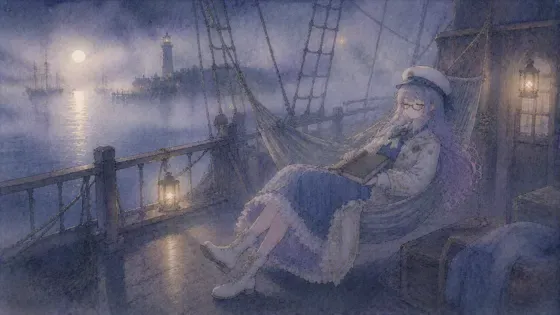
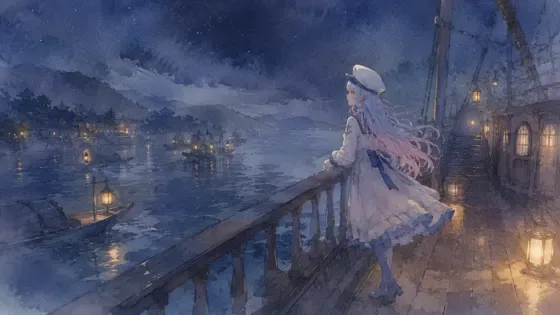
プロンプト
英語(English)
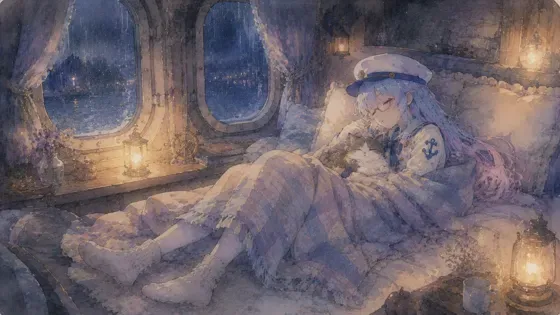
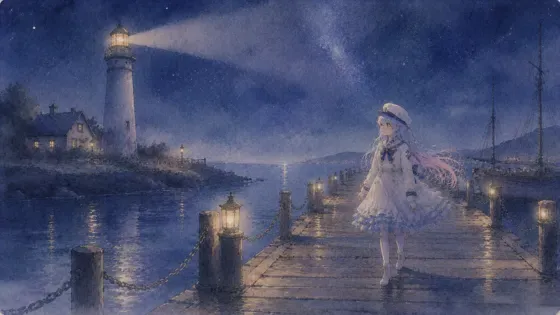
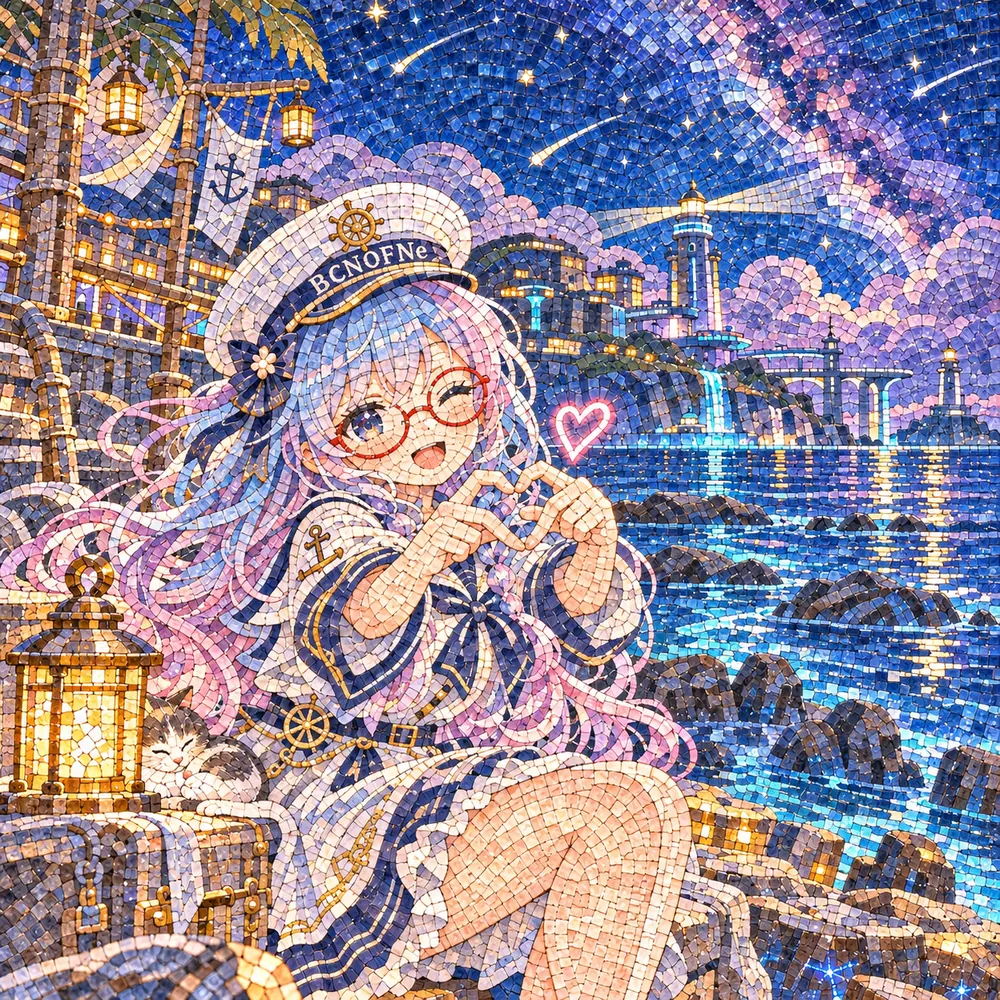
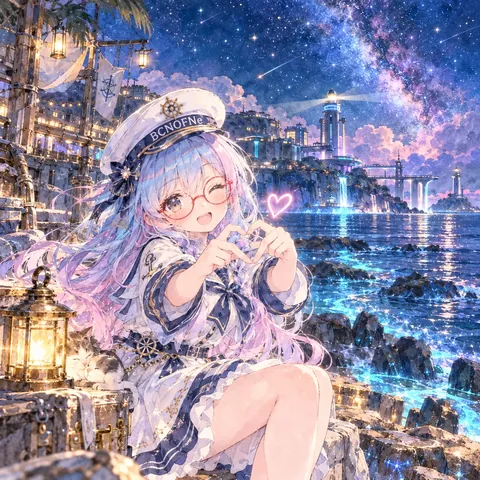
Redraw the attached picture in the style below, "Tessera Mosaic" (tile mosaic). This is a change of technique only: the picture stays the same picture, and only the way it is drawn and painted changes. Every section describes that one finished image.

[How to use the attached image]
Treat the attached image as the fixed layout. Copy its framing, camera height, horizon line, and the position and size of every person and object as they are. Then throw away its original paint, line work and surface texture, and rebuild everything — people, background, sky, small props — with the materials and marks described below. Apply the style to the whole frame evenly, not only to the background or only to the character.

[What must stay the same]
Same number of people and objects, each in the same place. For each person: the same face shape and features, expression, eye direction, hairstyle and hair color, clothing design and colors, accessories (glasses keep their shape and color), pose, hand positions, body proportions and head-to-body ratio. Same overall color relationships and the same time of day. Do not add, remove or move anything, and do not invent new characters, animals, props or background buildings.

[If nothing is attached]
If no image is attached, first set up a simple scene that suits the request (one subject, a clear place, a readable silhouette), then draw that scene entirely in this style, following every section below in the same way.

[Aspect ratio]
Use the attached image's aspect ratio and canvas. Without an attachment, use the ratio named in the request, or 3:2 landscape if none is given. Do not crop or extend the frame.

[Lines and edges]
There are no drawn outlines. Edges are made by rows of tesserae, the small stone or glass pieces, laid along the contour of each shape so that a line of tiles follows the outline of a face, a wave or a roof. Dark tiles may form a single-tile-wide edge, and the gaps between tiles form a natural grid of thin grout lines.

[Shapes and how the surface is built]
The picture is assembled from many small, roughly square or irregular tesserae about three to eight millimeters across in the scale of the picture, each a flat color. Tiles are laid in flowing rows that follow the form: concentric around a cheek, parallel along a horizon, radiating from a sun. Backgrounds use larger, straighter rows in a calm field pattern. Grout shows between every piece.

[Texture and material]
Slightly uneven stone and glass pieces, each with a tiny tilt, chipped corner and a faint sheen difference. Matte stone sits beside glossy glass pieces. Grout is a dull cement tone, thin but visible, and it breaks up every flat color into small facets.

[Color]
Keep the attached image's hues and relationships, translating each area into a range of tile colors: a few close shades per area so the surface twinkles slightly. Skin becomes warm cream, pink and ochre tiles; sky becomes several blues. Grout stays a neutral mid-tone, never white or black.

[Light and shading]
Light follows the attached image but is built from tile color, using lighter tiles for lit forms and darker tiles for shadow. A few glass tiles catch the light with brighter glints, and gilded or pale yellow tiles can suggest glowing areas.

[Faces, hands and small details]
Faces are built from small tiles in rows following the cheek and nose, with single darker tiles for the eye centers, brow line and mouth, keeping the attached person's identity and expression. Hair is tiles in streaming rows in its original color. Glasses are one row of tiles in the frame color. Hands are simplified shapes edged with one row of darker tiles, with the pose kept.

[Finish]
A flat wall or floor mosaic photographed straight on, with even grout lines and no fine detail smaller than a single tile. Outer edge ends in a plain border of tiles. The result must look like a finished piece made in this one technique from edge to edge, not a filter laid over the original.

[Do not mix in]
Do not use smooth gradients, fine brush detail or paint texture. No pixel-art squares of equal size and rigid grid, no stained glass leading, no bathroom tile photo, and no 3D relief. Do not make the tiles melt into one another. Do not mix in watercolor washes, blooms or paper-white bleeding, and do not blend in any other art style than the one described here. No readable text, letters, numbers, logos, watermarks or signatures unless they were already in the attached image.

[If instructions conflict]
First keep the layout and the people of the attached image, then apply this style's materials and marks fully, then match the color relationships, and only then work on fine detail. If keeping a detail exactly would break the style, simplify the detail in the style's own way rather than dropping the style.
日本語
添付画像を、下の画風「タイルのモザイク」(モザイク)で描き直してください。変えるのは描き方だけで、絵そのものは同じ絵のままにします。どの段も、その 1 枚の完成した絵の話です。

【添付画像の使い方】
添付画像を動かせない下図として扱う。画角・カメラの高さ・地平線の位置、人物と物の位置と大きさをそのまま写す。そのうえで、元の塗り・線・表面の質感は全部捨て、人物・背景・空・小物のすべてを、下に書いた材料と手の跡で作り直す。画風は画面全体に同じ強さでかける。背景だけ、人物だけにかけない。

【変えない所】
人物と物の数、それぞれの位置は同じ。人物は、顔の形と目鼻立ち・表情・視線・髪型と髪の色・服のデザインと色・小物(メガネは形も色も保つ)・ポーズ・手の位置・体の比率と頭身を変えない。色どうしの関係と時間帯も同じ。何も足さず、消さず、動かさない。新しい人物・動物・小物・背景の建物を作らない。

【添付が無い時】
添付が無い時は、依頼に合う簡単な場面(主役 1 つ・場所がはっきり・形が読みやすい)を先に決め、その場面を最初から最後までこの画風で描く。下の段は同じように全部守る。

【比率】
添付画像の比率とキャンバスに合わせる。添付が無い時は依頼の比率、指定が無ければ横長 3:2。画面を切ったり広げたりしない。

【線と縁】
描いた輪郭線は無し。縁は、石やガラスの小さなかけら(テッセラ)を形の輪郭に沿って並べた列で作る。顔や波や屋根の輪郭を、タイルの列が追う。暗いタイルを 1 枚幅の縁にしてもよく、タイルのすき間の目地が、細い升目になる。

【形と面の作り方】
絵は、四角っぽい、またはふぞろいな小さなかけらをたくさん集めて組み立てる。大きさは絵の中で 3〜8 mm ほどで、1 つ 1 つが平らな 1 色。並びは形に沿って流れる:頬のまわりは同心円、水平線は平行、太陽からは放射状。背景は、大きめで真っすぐな列を落ち着いた野原のように敷く。すべてのかけらのあいだに目地が見える。

【質感・素材】
石やガラスのかけらは少しふぞろいで、それぞれ小さな傾き・欠けた角・つやの違いがある。つや消しの石の隣につやのあるガラス。目地は鈍いセメント色で、細いがはっきり見え、平らな色をすべて小さな面に割る。

【色】
添付画像の色合いと関係を保ち、どの面もタイルの色の幅に置き換える。1 つの面に近い数色を使い、少しきらめくように。肌は暖かいクリーム・ピンク・黄土のタイル、空は数種の青。目地は中間の無彩色で、真っ白や真っ黒にはしない。

【光と陰影】
光は添付画像どおりだが、タイルの色で作る。光の当たる形は明るいタイル、影は暗いタイル。ガラスのタイルが数枚、光を拾って明るくきらめく。金色や淡い黄色のタイルで光る所を匂わせてもよい。

【顔・手・細かい所】
顔は、頬と鼻に沿って並べた小さなタイルで作り、目の中心・眉の線・口は暗いタイル 1 枚ずつで置く。添付の人の顔立ちと表情は保つ。髪は元の色のタイルを流れる列にする。メガネは枠の色のタイル 1 列。手は簡単な形の縁を暗いタイル 1 列で囲み、ポーズを保つ。

【仕上がり】
壁や床のモザイクを正面から撮った写真。目地は均等で、タイル 1 枚より細かい描き込みは無い。いちばん外側は無地のタイルの縁取りで終わる。端から端まで、この 1 つの技法で作った完成品に見えること。元の絵にフィルターを重ねただけに見えないこと。

【混ぜない物】
なめらかなグラデーション、細い筆の描き込み、絵の具の質感を入れない。同じ大きさで固い升目のドット絵、ステンドグラスの鉛の枠、浴室タイルの写真、立体の浮き彫りにしない。タイルどうしが溶け合わないようにする。水彩のにじみ・たまり・紙の白のぼかしは入れない。ここに書いた画風以外の画風を混ぜない。添付画像に元からある物を除き、読める文字・数字・ロゴ・透かし・署名を入れない。

【指示がぶつかった時】
まず添付画像の配置と人物を守る。次にこの画風の材料と手の跡を全体にしっかりかける。次に色の関係を合わせ、細部は最後。細部を正確に残すと画風が崩れる時は、画風を捨てずに、その画風のやり方で細部を省略する。
ほかの呼び方:モザイク・モザイク画・タイル画・タイル・石のモザイク
プロンプトは、ご自分の画像生成にご自由にお使いください(商用も可)。使う時に「BCNOFNe」の名前を添えてもらえると嬉しいです(任意)。見本の画像の転載・再配布はご遠慮ください。使われ方を知るため、押されたボタンや開かれたページの回数(番号・言語・混ぜた画風の組み合わせ)を、Cloudflare のサービスを使った当サイトの集計用サーバーで数えています。入れた文字は送りません。Cookie や端末の識別子は使いません。サイト全体のアクセス数を見るため、Cloudflare Web Analytics(Cookie なし)も使っています。通信や記録の扱いは、Cloudflare, Inc. のプライバシーポリシーに従います。